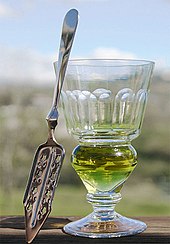
| 1 | Absinthe |
| 2 | Bananas Foster |
| 3 | Barbequed Oysters |
| 4 | Brains |
| 5 | Canned Dog Food |
| 6 | Chitlains |
| 7 | Chocolate gravy and biscuits |
| 8 | Dirt "Chocolate" |
| 9 | Dog Kibbles |
| 10 | Eel |
| 11 | Fried Apples |
| 12 | Fried Green Tomatoes |
| 13 | Fried Liver |
| 14 | Fried Okra |
| 15 | Goat cheese |
| 16 | Homemade Beer |
| 17 | Johnny Cakes |
| 18 | Kefir |
| 19 | Mountain lion |
| 20 | Pheasant |
| 21 | Quinoa |
| 22 | Rabbit |
| 23 | Raw Hamburger |
| 24 | Raw Milk |
| 25 | Roast Duck |
| 26 | Squirrel |
| 27 | Sushi (the raw fish kind) |
| 28 | Sweet COB |
| 29 | Sweetbreads |
| 30 | Watercress |
Wednesday, April 11, 2012
Have You Eaten These? (first 30)
Monday, April 9, 2012
Talkers, Whew!
Thursday, April 5, 2012
Great Chicken Round-up
So this trip down seemed like a good opportunity to gather them up and take them down. As if in a last-ditch effort to stay in Northern California, the hens began a desperate program of egg-laying, but it was no use; my mind was made up. I had the second half of the plan all figured out. I would carve a spot out in the back of my truck amidst all the other crap, er, goods that I was foisting off on relatives, and I would tuck the chickens in two plastic pet carriers. A blue tarp would protect my nice carpet bedliner and camper shell from flying chicken manure that might escape from the bars of the cage windows.
I figured that part one of the plan would work itself out on the morning I had to leave.
Finally it was Wednesday morning and I had to put part one into action, which was to get my two kids to go out to the chicken pen and help me stare at it to figure out how to get the chickens into the pet carriers.
You may ask, why did she not put them in the carriers during the night when they might have been submissive? It was going to be a long trip, and I didn't know how long one could humanely leave them in there, and there is a limit to how many layers of newspaper you can put on the bottom of the carrier. There were two sections to the chicken pen: a house, and an outdoor run. The outdoor run was fashioned by leaning two livestock panels up like a teepee against the house opening, and blocking the end off with a short panel. The original idea was to let them out on the property for few hours in the evening to eat bugs and grass, and then hop back in the house for the night. But they stubbornly refused to accept the new location of their house (I'd hoped that moving them nearer to the horse manure pile would give them a hint of what I expected from them) and insisted upon roosting on top of the dog house and various trees. So I kept them shut up with their house and run-nette.
After staring at the chicken house, we all agreed that no one could crawl inside to grab chickens; it was too small. So we then stared at the run for awhile. Someone would have to crawl into it.
The run was on a 2ft by 5ft piece of ground that had been rained on for a week, and four chickens had been pooping on for several months. I thought about offering my son five dollars to crawl inside and grab chickens, but suspected that might have worked better on a kid who didn't have a real job. I knew I'd have to do it myself.
The plan was to lay an old blue tarp in the run, get them down to the end of it; I'd pull the whole run loose from the house, crawl inside and with a small plywood board, sort of squeeze them towards the end, where my daughter would be waiting with the end panel slightly ajar. When each chicken would be peacefully driven down to that end, saw the small hole, stuck her body through, she would grab it and stuff it into the carrier while my son manned the "gate."
So I got the tarp into position. I threw a handful of dry cat food, their favorite, onto the tarp to lure them onto it. By now, they were feelin' the tension and wouldn't come out of the house. So I went to the back door and persuaded them by poking them with a little stick. They went out, but I'd forgotten that they could go under the house in a crawlspace, which they did. So I got a board to slide across the run side of that area, and went back to the other side, moved a brick and used my persuader again. They all popped out and stood there sullenly looking at the tarp. Chickens are very suspicious. The hens wouldn't trust the tarp, but stretched their long necks out to eat all the cat food they could reach, and then waited. Finally Pot Pie led the way and they all followed and began pecking up the nuggets. Now we had to work fast, since I wasn't willing to fill up their crops with cat food and then take them on a long road trip.
I slithered inside the run with my small plywood board and began to put the pressure on. The chickens weren't nervous anymore; they were panicked, and expoded in a flurry of feathers and claws. One went around me, one took off my glasses, and I don't know what the rest did because I wasn't wearing my glasses. I began laying hands on chicken parts, trying to grab something more substantial than a handful of feathers. I got one, shoved it at my daughter, who popped it in a carrier. One down. Boards that we had propped up against openings were falling over faster than we could re-do them. Petrolla was edging back and forth along the chicken house, trying to decide whether to be loyal to her sisters or make a run for it. But the three of us slowly cornered her and took turns lunging at her until I captured her with my grasp, fueled by my greatest weapon, the fear that she would get really loose and lead us on a merry chase around the property while I should have been getting ready to go. Bunny succumbed likewise. Now there was only Pot Pie left.
All my boards were askew, the run was pulled loose, leaving a big opening for escape. He tried to go underneath; he tried to run around; he tried to go back in the house. The kids were trying to grasp in a semi-helpful fashion, but the truth is, if you aren't firmly committed to hanging on to an unwilling chicken, you'll never keep it. Squawking and flapping, Pot Pie was getting upset and trying to get back in the house. I reached in and grabbed the first thing I could get ahold of, which turned out to be his wing. I didn't want to be holding a wing while the rooster went running across the field, so I reached again and got a foot. I hauled him out, grasped the other foot and held him up. Upside down. He was instantly calm. So calm we thought he might have just died of a heart attack. But his eyes were still open, so we stuffed him in the carrier with Bunny.
Apparently they all made the trip successfully, and we set the carriers in the floor of their new home that night with the hatches open. They will now enjoy the freedoms of a country ranch and the company of other chickens. Pot Pie will find out how he stacks up against the other roosters, and the hens can lay or not, pecking grass and bugs all day.
Sunday, February 26, 2012
Time Machine
Travelling backward through time; what’s not to like? We could be our former selves, more energetic, younger, and beautiful, with years and years left to sort out all the things we didn’t do quite right in real life. Of course, we’d have our mature, current brains to help us with that! Lovers of history could go back to witness first-hand the dramatic events that molded the world we live in today. Edge forward in the crowd to watch
HG Wells put his Time Traveler into the future. That’s fine with us, since his present is our past. His future was a little uncomfortable, with the Morlocks and Eloi, but it was terribly exciting, and scary. Modern movie-makers have done a lot with the subject too. In The Butterfly Effect, the main character keeps going back in time to “fix” the things that went wrong that kept his beloved from being his girlfriend. But then when he went back to the present, those little events he changed had unseen, unfortunate consequences. He was never able to make it work for him. I just finished listening to an audio book called Blackout/All Clear. Set in the near future, the scenario has “historians,” traveling back in time to observe but not alter events. In their understanding, events CANNOT be altered because of the fixed “space time continuum.” Things begin to breakdown when the historians during the London Blitz get stranded and they fear they have indeed altered events, perhaps enough to change the outcome of the War, and their present world.
When I was a kid in high school English class, we had to write some science fiction stories dealing with time travel. I remember one of them had an outcome that only a kid would come up with. The guy does some bad things, stealing some money and basically burning his bridges. But that’s ok because he is going back to the past with it and will be rich. Only when he gets there does he realize, as his purple bills blow away in the breeze, that his money’s no good here. My other story dealt with the paradox of changing the past to affect the future. The protagonist does not believe that changing the past will make any difference to what has already happened. But he must prove it to the others. So he goes back in time and shoots his father, only to feel his atoms disintegrate and dissolve.
It’s all fun and imagination; Time Travel can’t really happen.
But it can. Most of us have a Time Machine of sorts. The other day I was transferring hours of old family VHS video tape to av files on my computer so I could organize it and make dvd copies for my kids. It was very affecting to go back in time 20 years and watch our little family. The kiddies’ cute little voices saying, “Mama! Mama?” My young handsome husband tossing the baby up in the air and making baby talk. Myself, unwrinkled and thin, wearing my contact lenses. My dad, still alive, sitting on the back of the tailgate, talking with my grandma, also still alive. Truthfully, I couldn’t watch a lot of it all at once.
My Time Machine made me laugh, it made me exclaim, it made me a little melancholy. While it made me think of former good times and reminded me of how adorable my kids were, it was also a fraud. What I was seeing wasn’t real; it was at one particular moment in the past, but now it was just a very vivid memory in flickering lights. I could long for that memory, feel sad about how things have changed, wish I could reach out to that image and set that baby on my lap. But no one can do that because the only thing that is real is right now.
My Pop introduced me to a fascinating (ok, lowbrow fascination) show called “Hoarders.” The woman on one episode had hoarded so badly, her house ended up being ruined and unsalvageable. She collected and hoarded Victorian memorabilia. You could see that she was drawn to that era and used the items to mentally put herself there. They were her Time Machine. But while clinging to this idealized past time, she was destroying her “now,” her house, her relationships with friends and family, and her sanity.
Do you have any Time Travelling devices or knick knacks? I like all my little Time Machines, but my goal is to let them take a back seat to my appreciation of the present, and my living of the NOW!
Friday, February 24, 2012
Making Do With What You Have

(image: Dadant Beekeeping Supplies)
Our grandparents could give all of us advice on how to Make Do With What You Have. In fact, I’m certain that 90 percent of you have already heard that lecture from your grandparents, or parents if they were the ones who went through The Great Depression and had to “Make Do, or Do Without.” At least that was the reason I always was given to understand all the things my grandmother had tucked away in her house. The storage drawer at the bottom of her old refrigerator was full of tidy balls of stray string and neatly folded paper grocery sacks. There were two drawers full of jar lids, a cabinet in the back porch full of little margarine tubs, a drawer full of clear glass pill bottles and carefully rinsed plastic straws, and in the storage room were stacks of strange, old fashioned high heel shoes she must have worn in earlier days.
I’m not exactly sure how useful most of this stuff would have been in an emergency, but you never know.
We tend to be a generation that, when we need something, we go and buy it. And then we throw the old one away, And really, that makes more sense today because of technology and the way things are made than it used to “in the old days.” But sometimes, sometimes we need, not want something. And we need it NOW, but we don’t have it. And that’s where a quick, outside-the-box-thinking mind saves the day.
Our family does Civil War Reenacting. Several years ago, the town of
Melinda, my eldest daughter enjoys horse endurance riding. She had been looking forward to riding in the Tevis 100 miles in 24 hours race for a long time, and had finally arrived. She and part of her team were setting up camp at
I grew up in the beekeeping business. We all worked in it, from extracting honey to moving the boxes of empty and full combs on the hives out in the beeyards. We usually drove many miles to the different beeyards, often in remote locations. It was important that we had all the equipment we needed when we drove out. One very important item that couldn’t be done without was the veil. Each person needed one. It was basically a wire screen box that your head fit into, with fabric mesh at the top to fit onto your hat, and mesh at the bottom that tied around your neck, over your collar. This one day, a whole crew of us, my mom, my sisters, my brother and I went out to work in the beeyard putting empty combs on the beehives. When we finally arrived and sorted out the equipment, we saw in dismay that we were short one veil. It was unthinkable that one person should draw the lucky straw and sit in the cab or kick back in the shade while the rest toiled away, so we looked around us for a substitute.
I don’t know if they still make “Cool Cushions,” but at the time, we had them in every vehicle. They were two paddle-shaped plastic mesh sleeves hinged together in the middle with fabric. Inside the sleeves were coils of wire that kept your hot, sweaty bottom off the hot sweaty vinyl truck seat in the summer time. We took the Cool Cushion apart, pulled out the steel coils and tied one festively striped mesh sleeve around the head of one unlucky kid.
For years I would snicker every time I thought of how that had looked, like a giant walking fly swatter, or a person who got their head stuck in a big oven mitt. I would try to remember if we had used the less important back section or the hot, sweaty bottom section. But for some reason, I never had a real clear image of the actual ludicrous sight. Recently I had a good laugh with my sister, reminiscing over that episode and mentioned that I couldn’t remember who had actually worn the Cool Cushion. And then I found out why my memory of the sight was vague; it had been me.
Friday, December 16, 2011
Sayings

It seems to be the nature of humans to take ideas, core beliefs, and basic philosophies and condense their essence down to mottos and sayings, abbreviations and acronyms. The athlete says, “No pain without gain,” and the die-hard Bluegrass traditionalists say, “If it ain’t got a banjo, it ain’t
Some time back I learned the difference between an abbreviation and an acronym. An abbreviation can be the initials of the main subject, such as I.R.S., the government organization we love to hate. Yesterday I read a little story about a father who used an abbreviation of words as a saying for his young son. Whenever the son was in a situation where he might lose his composure, become upset, or use bad judgment due to peer pressure, he should say the secret code word to himself: “Essie.” Essie would help the growing boy to cope with difficult situations and difficult people. Years later the boy realized that Essie was the way his father packaged the advice of “SC,” or self-control.
Acronyms are fun. They are when you take the first letters of the main object or saying and put them together to make a pronounceable word. Some acronyms started out as abbreviations and have actually become real words. Think of snafu and radar. “Situation normal; all f*ouled* up,” and “Radio detecting and ranging.” Some years ago when I was dieting, I wanted a saying or acronym to put it all together and inspire me. With much tortuous wordsmithing I came up with S.E.P.T.I.C, “Special eating plan to improve cuteness.”
Our family has developed various sayings over the years. When we say them, we don’t have to try to come up with the words to convey just the right meaning of what we are thinking; the saying does that. We all know what you mean when you say “When you work, WORK. When you play, PLAY!” When you are fixing the fence or stacking the firewood then put all your attention there. Work hard and steady, and get it done! And then, when you kick back with your musical instrument or get your horse ready for a ride, don’t worry about whether your stack was straight or keep taking breaks to go back to tighten the fencing.
One set of sayings that is particularly important to me is “Could’a, would’a, should’a,” and “What’s done’s done.” I have a bad habit of second-guessing myself and regretting what I should or shouldn’t have done.” Saying these to myself helps to put a bookend on that row of worry and second thoughts falling off the shelf of my mind.
When different members of the family were moving around, going to school, still trying to get settled, my sister gave this saying, “Where family is, that’s where home is.” My mother used to say, “Every unpleasant experience you have, if it doesn’t kill you, helps you learn something.” I loved how the exception for death was inserted!
The most profound statement in our family is also the most enigmatic. I can’t remember whether I introduced it to my mom after I read it somewhere, or if she told it to me after hearing about it. It is short, only three words. I was moved enough by this saying to put it in counted cross-stitch and frame it, one of only two cross-stitch projects I ever made. My mom hung it by her front door. It said, “It Doesn’t Matter.” When someone worried excessively over an insignificant problem, you could say, “It doesn’t matter,” and you didn’t have to explain your advice further. The saying wasn’t just words; it was a philosophy. Don’t fret and worry over the things that aren’t important in the scope of life, because they just don’t matter that much. Eventually we quit saying it; we just pointed up to it and smiled.
Years ago, the framed saying would go crooked, probably when someone shut the front door too hard. Picture straighteners can’t stand that state, so someone would jump up to slide the string on the back of the frame along the nail to make it level again. But one time I stopped my mother who had stepped over to fix it. “Mom,” I said solemnly, “Really, It Doesn’t Matter.” She stopped, laughed, and stepped back.
It hangs crooked to this day.